Beyond Material Gifts: Why Emotional Digital Assets Hold the Highest Value
Quick answer
Modern gift-giving is shifting away from physical clutter toward emotional digital assets that create lasting memories.
By LifeStory AI Editorial · ·
In this guide (8 sections)
By choosing experiential gifts like cinematic photo videos, you offer profound personal connections that physical items simply cannot match.
You know the polite smile that appears when someone unwraps another object they did not ask for. The wrapping looks festive. The feeling fades by evening. What people keep talking about later is rarely the sweater. It is the moment that made them feel seen.
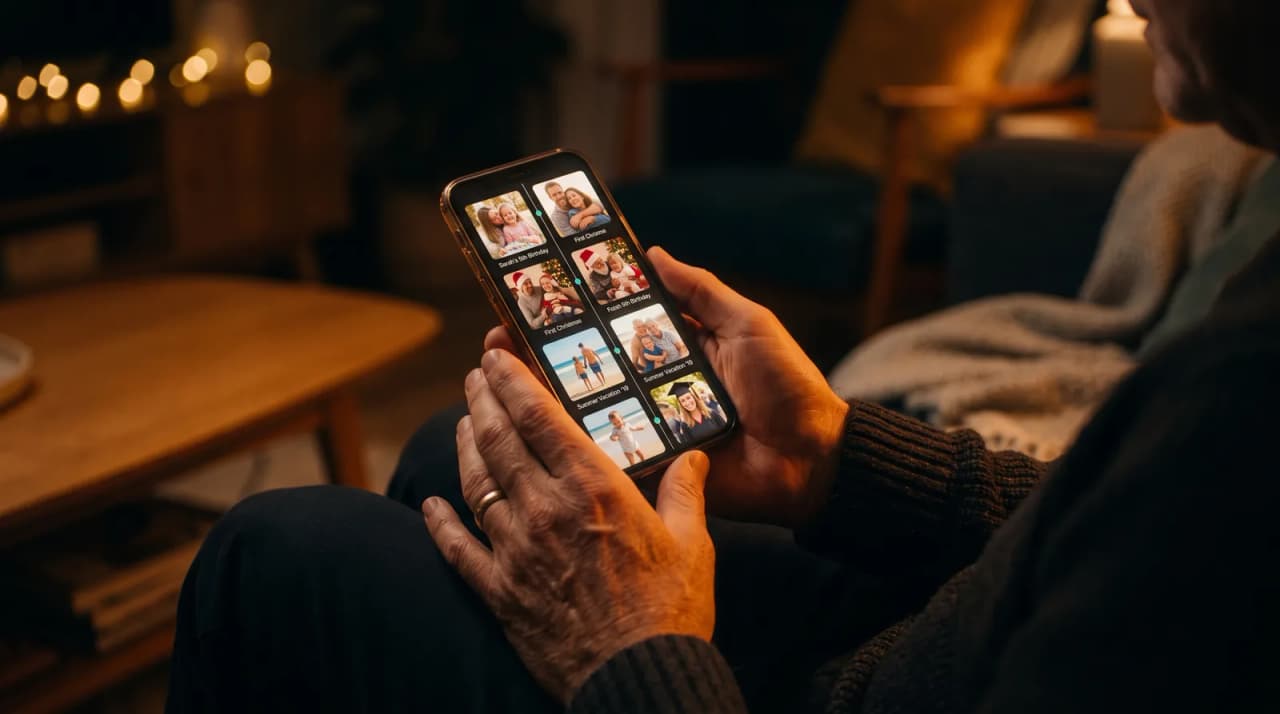
Imagine giving your mother a short video of her children's faces across twenty years instead of another scented candle. She watches it once at the table, then again alone the next morning. That second viewing is the real gift: access to a feeling she can return to.
Why do physical gifts lose power so quickly?
Many households already own more than they can use. Another gadget can feel like storage work dressed as generosity. Connection is the scarce resource, not inventory.
Sources: American Psychological Association grief resources (opens in new tab).
Physical items also age in public ways. They break, date themselves, or migrate to a closet. A digital keepsake can travel with someone without asking for shelf space.
What do we recommend when a gift needs to matter?
We generally recommend the Heart-Over-Shelf Test before you buy anything: if the gift disappeared tomorrow, would the person still remember how it made them feel? If the honest answer is no, look for a memory asset instead of another object.
That test is especially useful for hard seasons, when grief-aware tributes or quiet family milestones need tenderness more than novelty.
What is the 3H Value Filter for digital keepsakes?
Use the 3H Value Filter to judge whether a digital gift is actually strong:
- History - it shows a real shared past, not a generic template.
- Heartbeat - it creates an emotional reaction in under a minute.
- Handy access - the person can reopen it on a phone without special software.
A LifeStory AI evolution video tends to clear all three when the photos are personal and the reveal is intentional. A random stock slideshow usually fails the first two.
How do experiential digital gifts compare in practice?
| Gift type | Best fit | Why it can work |
|---|---|---|
| Photo evolution video | Anniversaries, birthdays, reunions | Compresses years into one watchable arc |
| Voice letter | Long-distance parents or partners | Carries tone that text cannot |
| Shared album with notes | Ongoing family archives | Builds context around stills |
| Class or experience voucher | Hobbyists and retirees | Creates a future memory to anticipate |
If you want the science-adjacent emotional pattern behind tears and nostalgia, start with why evolution videos make us cry. The short version from an editorial seat: people cry when time becomes undeniable.
How can you create a meaningful digital gift without a studio?
You do not need professional editing skills to give a strong memory asset. Gather a handful of clear photos, put them in order, and let LifeStory AI generate an evolution video you can present with care. The craft is in the selection and the reveal, not in keyframes.
Uploads are stored encrypted, used only to create your video, and deleted on request. That privacy default matters when the gift includes childhood faces, private homes, or years of family life.
What if the recipient is not "into tech"?
Choose a format they can open without a tutorial. A standard video file played on a TV usually feels more generous than an app login or a fragile web page. If they prefer paper, print a QR code inside a card so the digital gift still arrives with a physical gesture.
How should you present a digital gift so it feels generous?
Do not drop a bare link into a busy group chat and call it done. Stage the moment.
- Cast the video to a large shared screen during a quiet pause
- Pair it with a handwritten note or printed QR code
- Watch the first play together when you can
- Send the downloadable file afterward so they can keep it
The same care helps for occasion-specific gifts like Father's Day life-journey tributes or last-minute anniversary surprises.
Cross-method note: The Temporal Shock Lens explains why a short private cut often outlasts a ten-minute public montage emotionally.
What have we noticed?
We've noticed keepsake videos watched privately on a laptop often get replayed more than big-screen reveals — both matter, for different reasons.
Our editorial take
Our editorial take: not every emotional arc belongs on a public feed; intimacy is part of the value.
A surprisingly specific detail
Send distant relatives a download link, not a compressed chat forward — generational loss is the silent killer of legacy files.
What mistakes do we see over and over?
- Sending the file with no ceremony - context is part of the present.
- Using random or low-clarity photos - the emotion never locks on.
- Overloading the timeline - long dumps dilute the heartbeat.
- Choosing a tool that keeps family photos forever by default - trust is part of value.
- Making it public before the recipient sees it - surprise and dignity matter.
- Confusing novelty filters with meaning - gimmicks age faster than memory.
Before you give a digital keepsake
- Run the Heart-Over-Shelf Test on your current gift idea
- Confirm the gift passes History, Heartbeat, and Handy access
- Select clear photos (at least three, up to the studio's maximum) with real change between them
- Generate the video with LifeStory AI and preview it once
- Plan the reveal setting and a keepable file handoff
- Write one sentence in a card explaining why these photos matter
Frequently asked questions
Are digital gifts really better than physical ones?
Not always - but when someone already has enough objects, a memory asset that passes the Heart-Over-Shelf Test often outlasts another thing to store.
How many photos should a digital keepsake use?
A focused set of clear images (at least three, up to the studio's maximum) with visible change between them is usually enough. Long dumps dilute the heartbeat.
How should we hand off the file?
Stage the reveal, watch the first play together when you can, then send a downloadable copy. Context is part of the present.
Is upload privacy part of the gift's value?
Yes. Tools that delete source photos quickly and encrypt uploads respect family archives in a way novelty apps often do not.
The highest-value gifts are not always the most expensive ones. They are the ones a person can feel again on an ordinary Tuesday.
More in this topic
How to Create the Ultimate Mother's Day Video Tribute Using Old Family Photos
Gather historical family photos and animate a deeply emotional Mother's Day tribute video in minutes.
The Psychology of Nostalgia: Why Watching Someone Grow Up in Seconds Triggers Deep Emotion
Watching a person age in seconds forces the brain to process the fleeting nature of time, triggering a powerful emotional response called sweet…
How to Surprise Dad With a Cinematic Life Journey Video
You can surprise your dad with a cinematic life journey video by gathering a few photos from different stages of his life and processing them through…